Go west
Most penguins live around the western islands of Isabela and Fernandina, where the cool upwelling is strongest. Choose an itinerary that reaches them.
Isabela & Fernandina, Ecuador
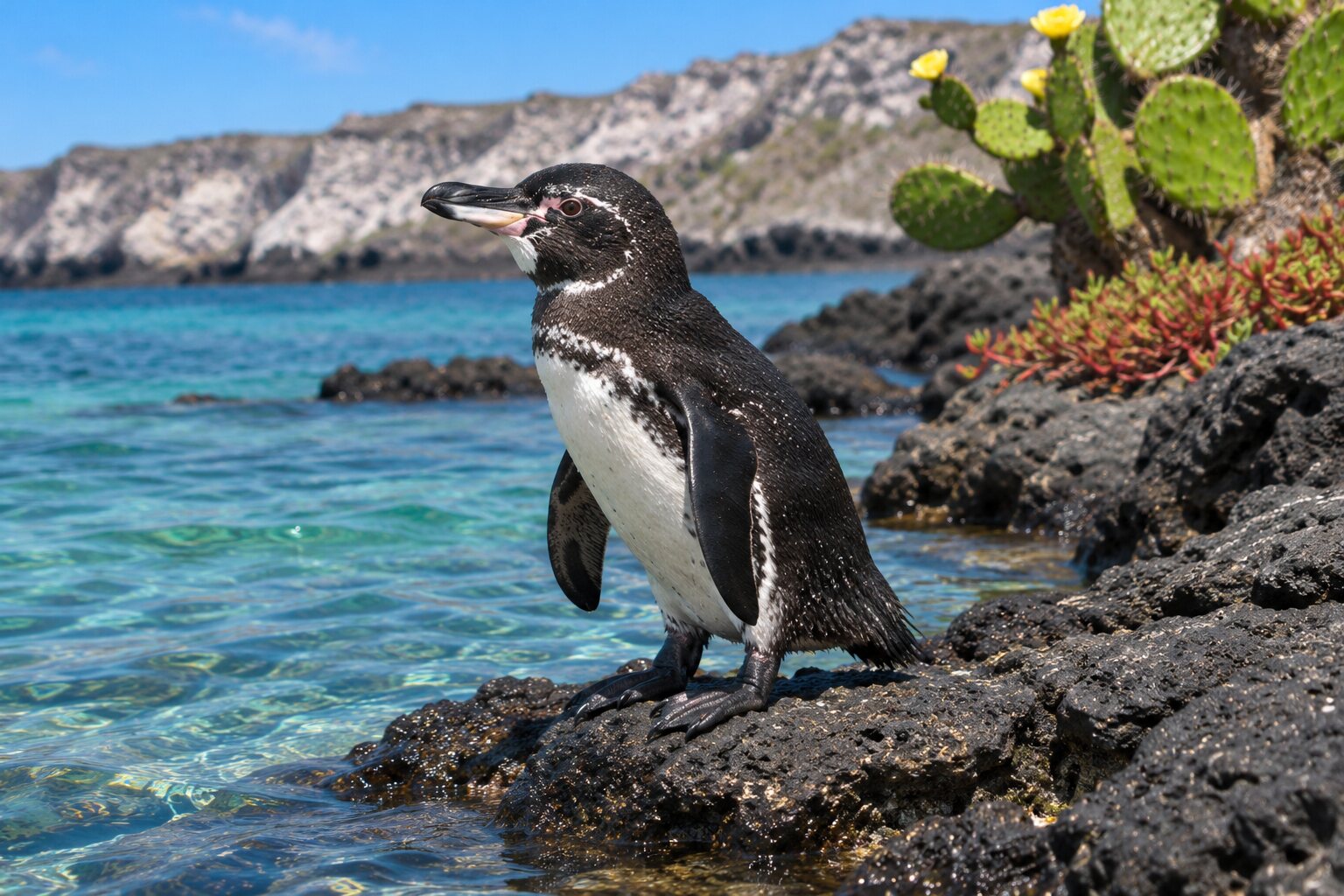
The Galápagos penguin is the only penguin to live on the equator — a small, heat-dodging bird that fishes the cold upwellings around the western islands and rests in the shade of the black lava shores.
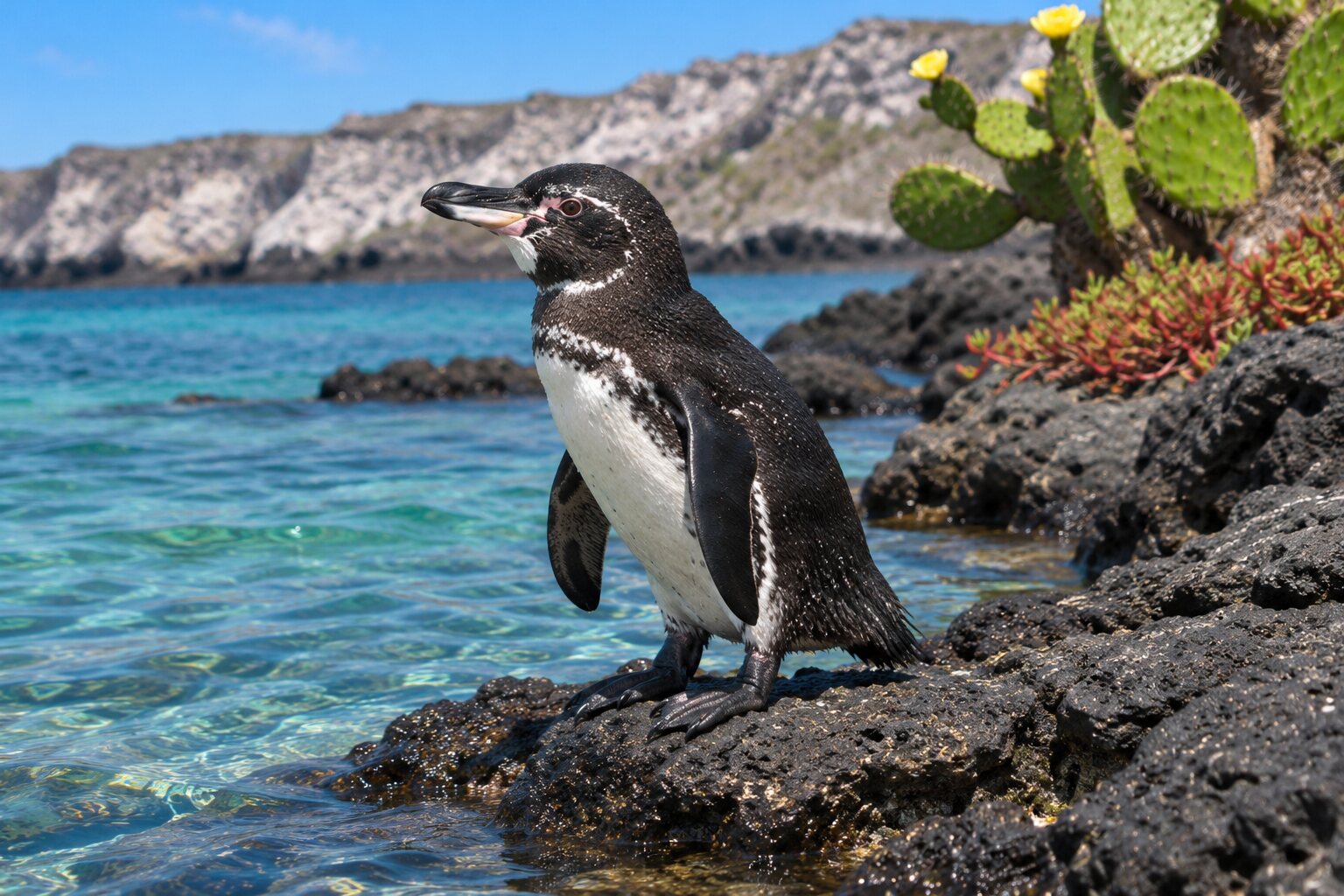
Penguins reach the Galápagos on the cool Cromwell and Humboldt currents, which sweep nutrient-rich water up around Isabela and Fernandina. That cold water lets a penguin survive on the equator — but only just. It is the rarest penguin of all, with a population numbered in the low thousands and tied tightly to the state of the ocean.
Because they stay close to the cool-water shores, Galápagos penguins are most often seen from the water — porpoising past a panga, or darting through a shoal while you snorkel off a lava point. On land they tuck into cracks and caves in the rock to escape the sun.
Galápagos penguins are seen on guided island cruises and day tours — almost always alongside the water.
Most penguins live around the western islands of Isabela and Fernandina, where the cool upwelling is strongest. Choose an itinerary that reaches them.
The best encounters come in the water — snorkelling off Bartolomé, Isabela and the Mariela Islets, where penguins hunt small fish in the shallows.
July to November brings cooler, richer water and the most active birds. Sightings are possible year-round but less reliable in the warm season.
The national park requires a licensed naturalist guide. Penguins are watched from boats and in the water, keeping the regulated distance from the birds.
Galápagos Islands is one of many wild shores where penguins come ashore. Follow them around the globe.
Where to see penguins