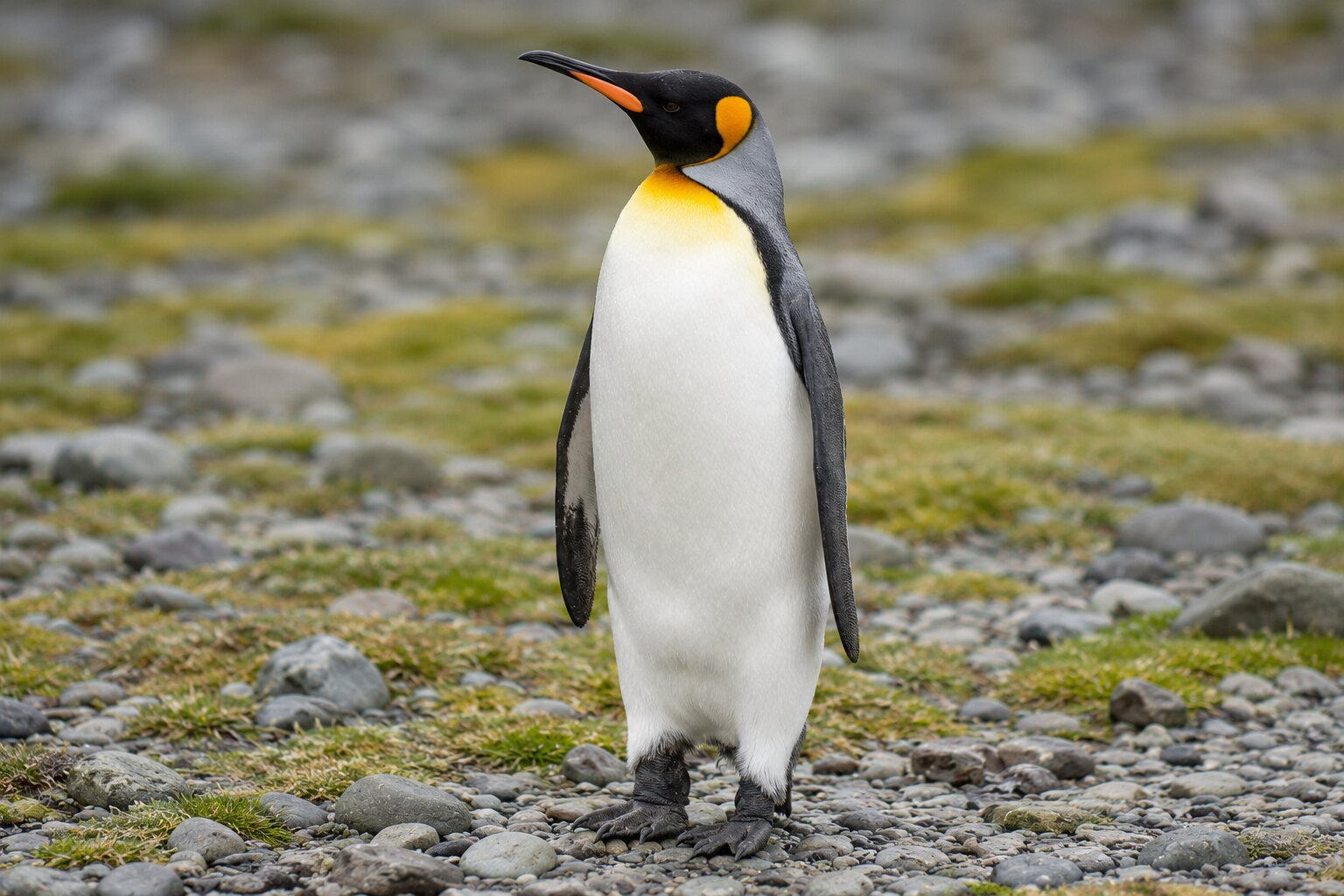
Travel by expedition ship
There are no flights and no lodges. Landings are made by Zodiac from expedition vessels, usually sailing from the Falklands or Ushuaia.
South Georgia, Sub-antarctic
On a broad glacial beach on the island of South Georgia, a quarter of a million king penguins gather in one of the greatest wildlife spectacles on earth — a shifting, calling mass of birds that runs from the surf to the foot of the mountains.
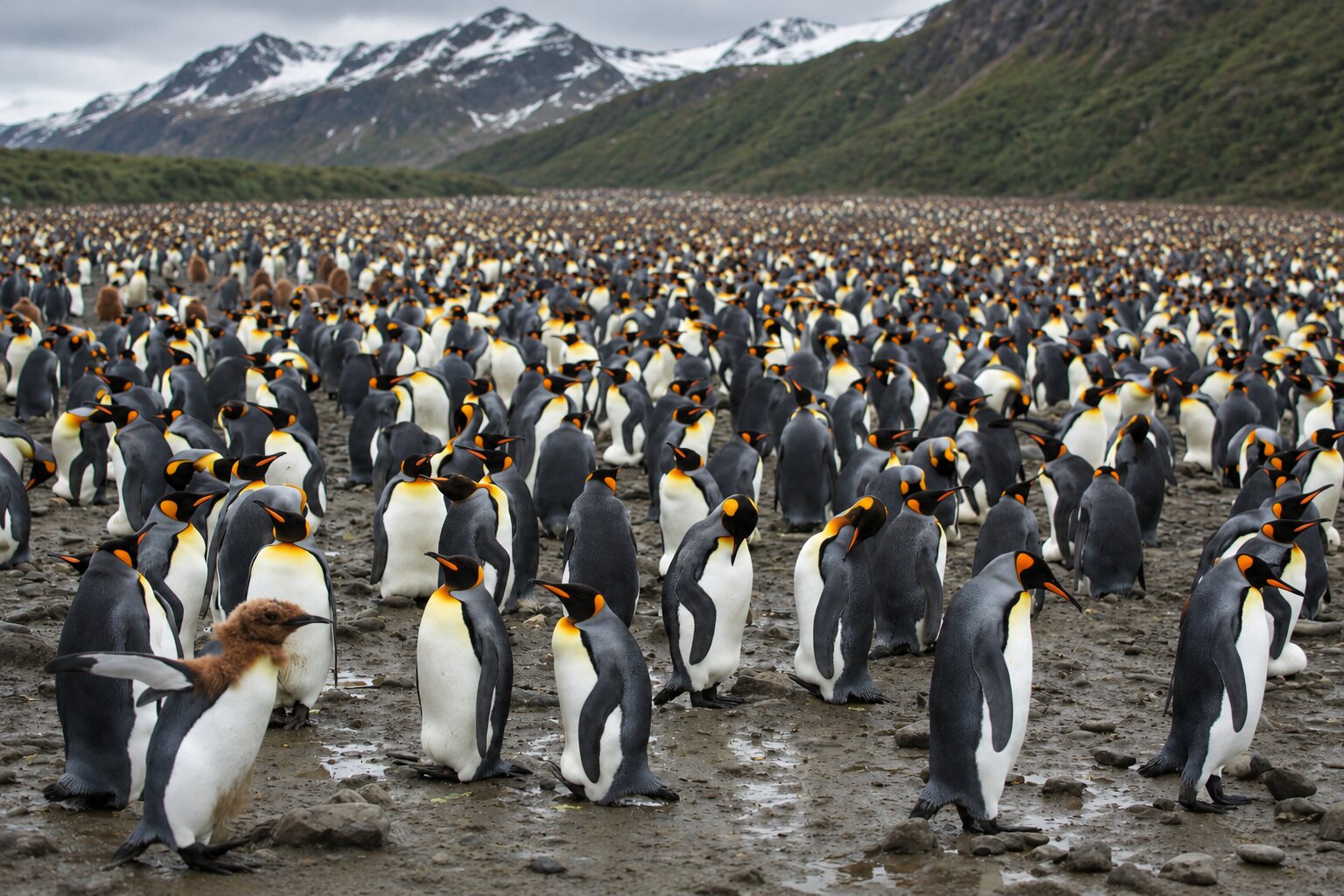
St Andrews Bay holds one of the largest king penguin colonies anywhere. Fed by meltwater streams from the glaciers behind it, the beach stays open and the birds spread across it in their hundreds of thousands — adults in their crisp silver and orange, and dense brown crèches of the woolly chicks that kings raise over more than a year.
The sheer scale is what stays with visitors: the sound carries far out to sea, and the colony never falls still, with birds arriving and leaving the surf throughout the day. South Georgia lies deep in the sub-antarctic, so the only way to stand here is from an expedition ship.
South Georgia is reached only by sea — St Andrews Bay is a landing on sub-antarctic expedition voyages.
There are no flights and no lodges. Landings are made by Zodiac from expedition vessels, usually sailing from the Falklands or Ushuaia.
Voyages run from November to March, the austral summer. Early in the season brings deep snow; later, the colony is full of growing chicks.
South Georgia enforces strict boot-cleaning and distance rules to protect the wildlife — follow the expedition staff exactly on every landing.
Landings depend entirely on surf and wind. Build in flexibility; the bay can be rough, and the day's plan bends to the sea.
St Andrews Bay is one of many wild shores where penguins come ashore. Follow them around the globe.
Where to see penguins